


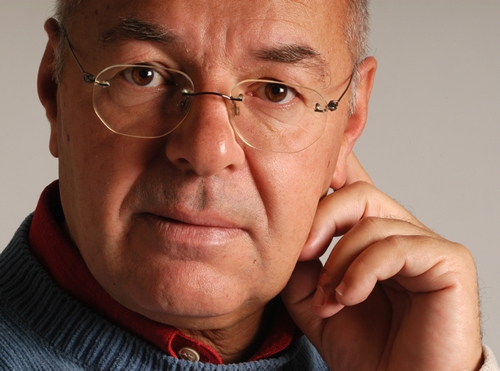
Sindo Saavedra
Sindo Saavedra, a composer, supporter of popular arts, painter and playwright, was the author of the Las Palmas de Gran Canaria Carnival Anthem.
He was born in Las Palmas de Gran Canaria and he also died here, very close to the sea and the beach which he loved so dearly, Las Canteras. From a young age he came into contact with the current cultural movements, and he lived in cities such as Malaga, Paris, Chicago and in countries such as Germany and Italy. On his return to Gran Canaria, his work in composition, research and the preservation of music and dance from the Canarian archipelago was recognised at all social and cultural levels.
From his work, one of the best known pieces is the Las Palmas de Gran Canaria Carnival Anthem: under the title of Ponte Tu Mejor Disfraz (Put On Your Best Costume) it has been like a letter of introduction to the Gran Canaria capital's most international and best-known fiesta. Sindo used to say that music in the Carnival justified dressing up.
He was hugely fond of his city and of his native land, and his work is steeped through and through with his values regarding freedom, social commitment and the environment.
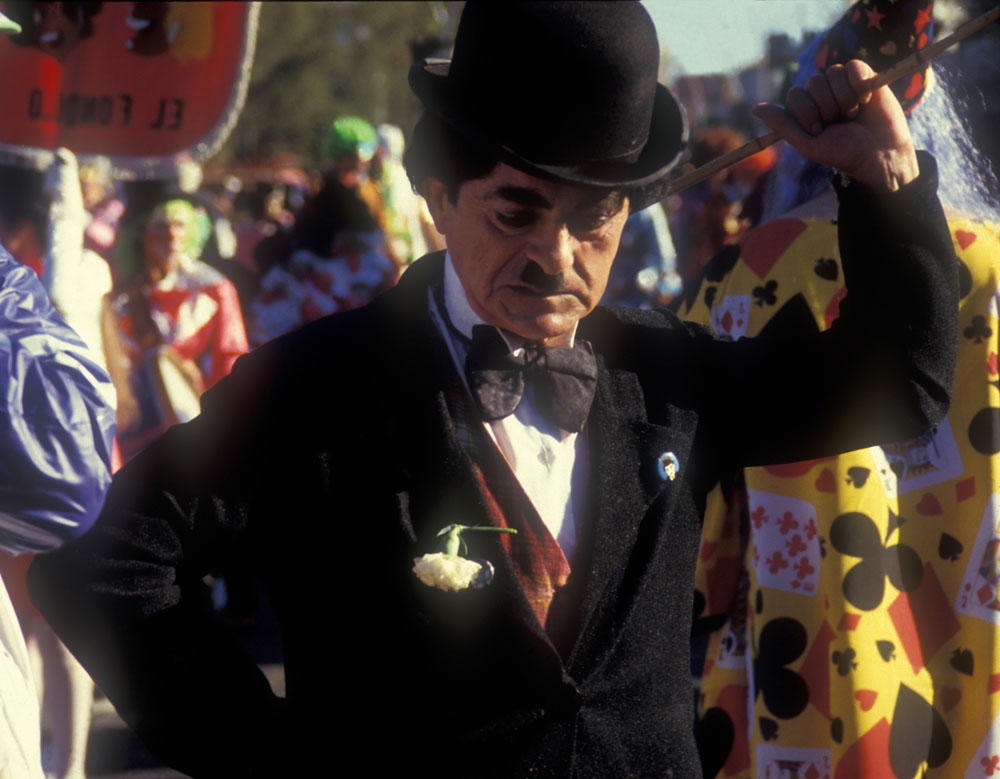
Santiago García, Charlot
Santiago García Díaz, the Las Palmas Carnival Charlot (Charlie Chaplin), was a man who always stood out for his humanity, charm and charisma. He was born in Santa María de Guía, in the north of Gran Canaria, and he always took part in the festivities, even in the era when they were banned. In 1976, with the start of the official Carnival celebrations, he started to dress up as Charlie Chaplin, a personality whom he admired and respected, second to none. Dressed like that, always with his stick, his bowler and his bow tie, and his peculiar gait, he used to walk up and down the streets of the city, greeting the ladies like a true gentleman, full of tenderness towards the little ones and, above all, making everyone laugh.
He died in 2001 at the age of 73, just a few days after the end of that year's Carnival. The Carnival groups and the personalities from the fiestas went to bid him farewell, all in their costumes as he himself always used to say "may my funeral be a party full of Carnival party-goers looking to have a great time".
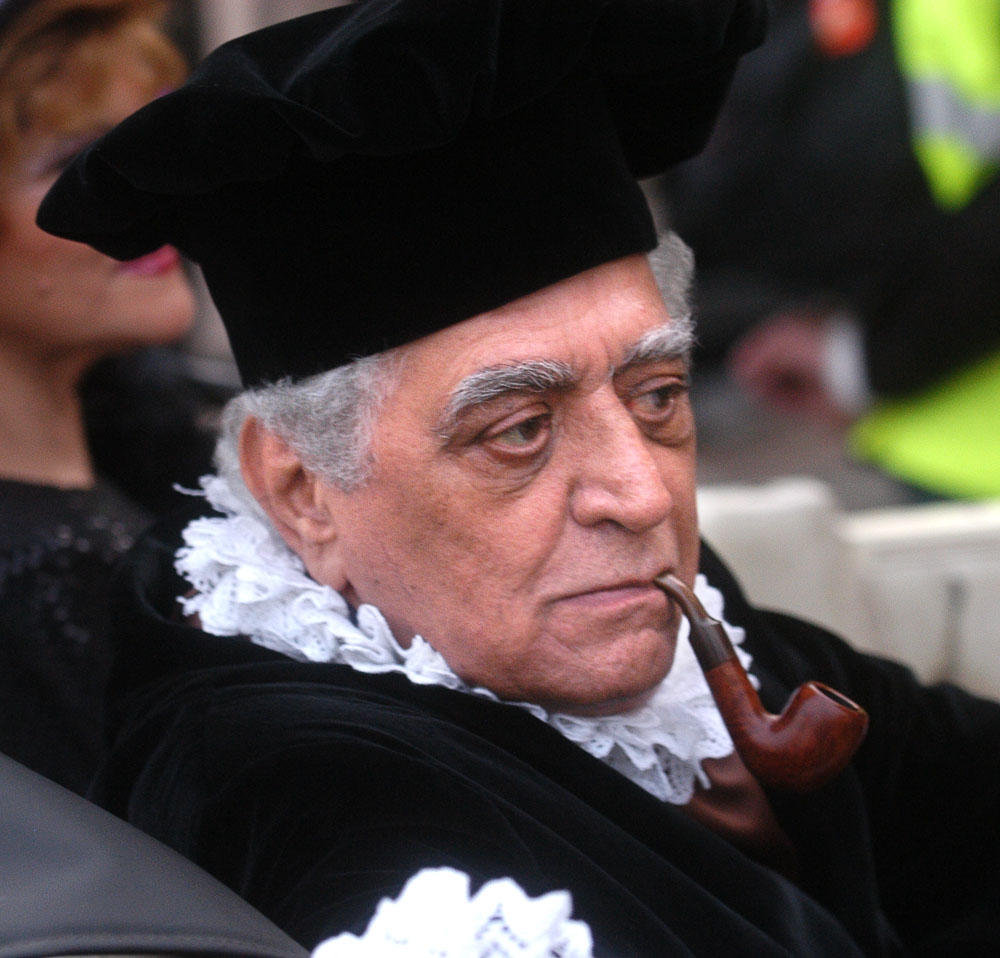
Manolo García
Manolo García is considered to be the father of Carnival in its modern incarnation in Las Palmas de Gran Canaria.
In 1976, a few months after Franco's death, Manolo García, originally from the La Isleta quarter, telephoned the province's Civil Governor and got permission for the Carnival celebrations to return to the city's streets after 40 years of prohibition.
He was born in 1934 in Pérez Muñoz Street. Having been a trader in shady deals, a neighbourhood leader, and presided over cultural and sporting associations, he decided to set what he himself termed the most difficult project of his life going.
The greatest publicist of the Carnival took any chance that offered itself to demand that the celebrations should reach out to everyone and he always tried to get absolutely everyone involved.
The Carnival organisation has been awarding the Manolo García Trophy since the 2010 Carnival.
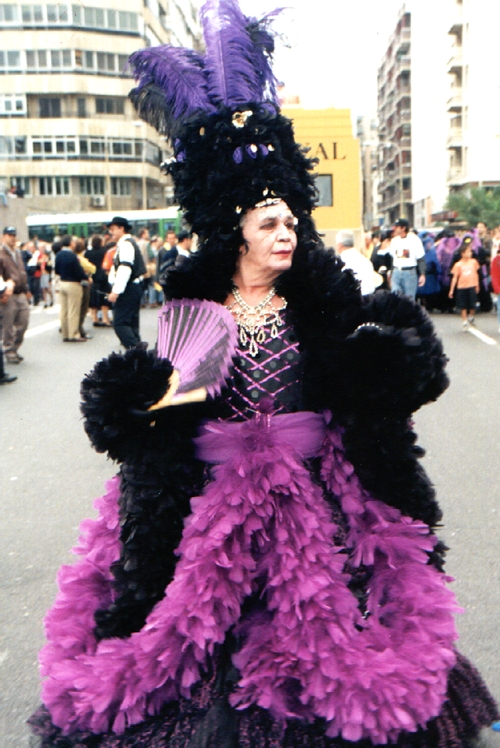
Juanito el pionero
Juan Curbelo, Juanito el Pionero, became one of the best loved characters in the Las Palmas de Gran Canaria Carnival. He was one of the pioneers, of the first people to hit the streets in fancy dress. His personality and the way he celebrated the Carnival festivities made him one of the most original representatives of Carnival at ground roots level. And with his particular way of interpreting the celebrations, he always said he considered himself to be the First Drag Queen of the festivities.
Good cheer just poured out of him. All the same, he had a very hard time as a young man. During the Franco dictatorship, he was locked up in the what was known as a correction centre for the reeducation of homosexuals in Tefia on the island of Fuerteventura. Juan Curbelo belongs to the first generation of gays who were imprisoned for their sexual orientation. At the age of 16, he refused to renounce his homosexuality and his stay turned into a cruel sentence which did not, however, ever take away his eagerness.
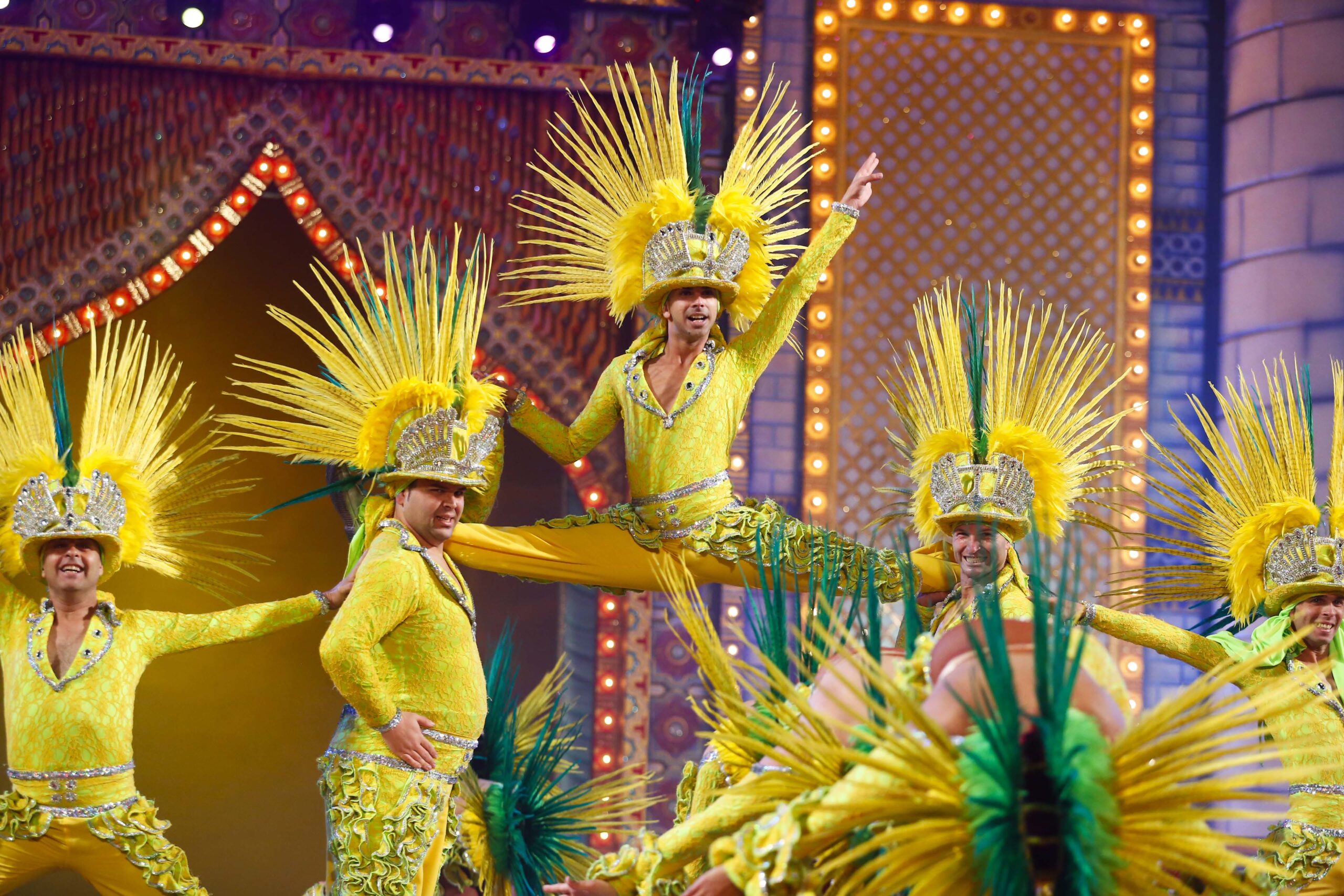
Araguimé
First Prize for Performance in 2003, 2005, 2006, 2008, 2010, 2011, 2012, 2014 and 2015 for the show "A Ritmo de Carnaval" (To the Beat of Carnival)
First Prize for Costume 2010, 2011, 2012, 2013, 2014, 2015, the latter being for the costume "Amanecer en Arabia" (Arabian Dawn)

Bahía Tropical
Bahía Tropical, presided over by Carmen Guillén, went on stage of the Grand Masked Dance Carnival in 2013.
Rafaela Dámaso took over as director of the group in 2015 and in 2017 she became the group’s new president.
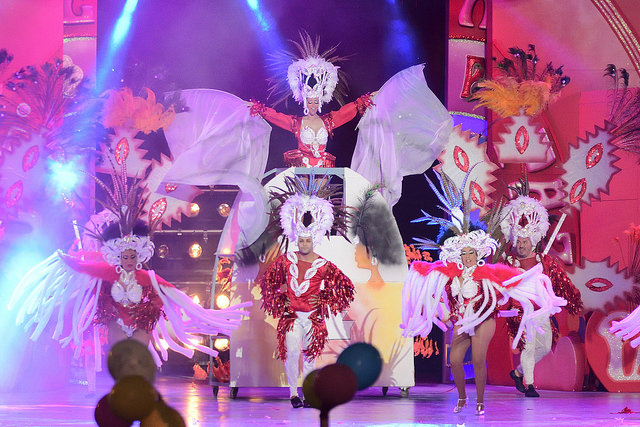
Baracoa
Founded in 2011, the comparsa of Lomo Apolinario participates for the first time in the Carnival of Las Palmas de Gran Canaria in 2012 with the show "Renacer, querer es poder" ('Born Again, Wishing is Power'.) A year later, in 2013, they won the First Prize for Interpretation, the highest award, which they also won in 2016, 2022, and 2023.
First Prize for Costume in 2023.

Brisa de Volcán
From its establishment in 2006, it has never missed this date at the Canarian capital's Carnival.
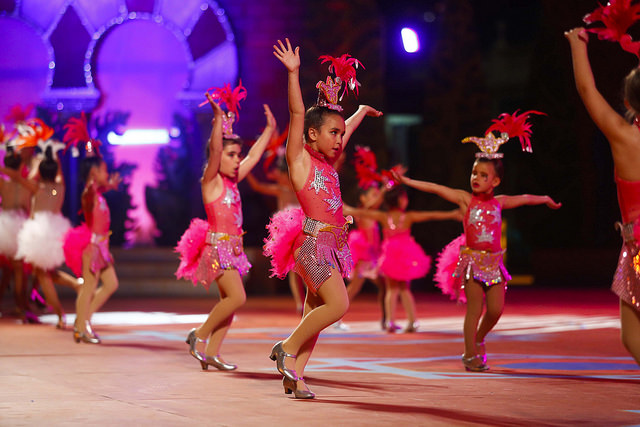
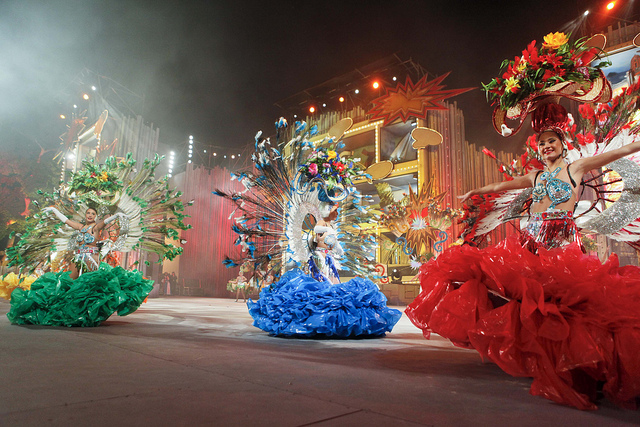
Cubatao
Las Palmas de Gran Canaria Carnival
First Prize for Performance 2009
Third Prize for Costume 2017